The Blogger’s Guide to Online Marketing

January 17, 2012

Note: This is a guest post by Lior Levin. See Lior’s bio at the end.

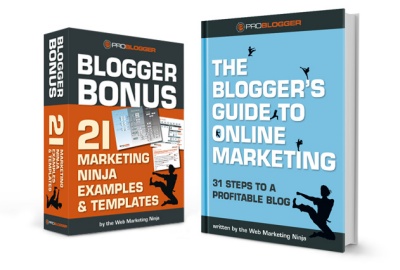
The Blogger’s Guide to Online Marketing is one of ProBlogger’s newest ebooks, written by the Web Marketing Ninja. ProbBlogger was started by Darren Rowse, who wrote the most popular of the ProBlogger products, 31 Days to Build a Better Blog.
Written specifically for bloggers, this online marketing guide features yet another set of 31 steps intended to help bloggers start making money with their blogs. Many bloggers go years and years without seeing readership increase or any revenue at all. This practical guide is intended to change all of that.For Those Who Want the Next Level

For me, one of the things that separates this guide from the (seemingly) thousands of others is that it’s advanced, while still maintaining the tried and true step-by-step style Problogger is known for. So many products, selling from a dollar to over $100, seem to focus on just one thing: starting a blog. Well, if you’re anything like me, you’re well past the point of starting a blog. Now you want to see it actually DO something for you.

My biggest takeaway is that there is so much more to blogging for profit than great content. Yep, content is King, but even kings have armies, a staff, and a whole bunch of other things in place to make sure everything works out. We spend so much time creating great content that sits and earns nothing because we do not understand basic, but still largely misunderstood business practices. Something that occurred to me was that even SEO and design seem quite small when you take a step back and really look at what you are trying to accomplish – a real money-making business.

Blogging well is a feat all on its own. But once that is mastered, there is the bigger task of turning a blog into a viable business – which it can be.

But trying to figure out exactly how to make money blogging isn’t easy, unfortunately. And there is a lot of trial and error – without some sort of navigational guide. You could end up spinning your wheels, getting burned out, and giving it up altogether. I have personally been down that road more than once with blogging.

Advertising revenue has always been a money-making vehicle, but all too often, only pennies are generated even when a blog has thousands and thousands of visitors per month.Along came the idea of products – and selling them via blogs. Monetizing a blog with products that are developed and sold by the blogger is becoming more and more popular, and one of the best ways to make money blogging. But there is still a lot of confusion around developing products that people want, selling them the right way, for the right price, and to the right group of people.

So in true ProBlogger style, The Blogger’s Guide to Online Marketing includes practical, step-by-step tips. Rather than just an overview of things you’ve heard before, this guide is based in theory and logic and then followed up by simple things to do to start to see the steps work.

As so many successful bloggers will admit, making money from blogging truly is like building a house, and there are foundational elements and then others that you build on top of them. It’s important to get things in order.

Features and Freebies

The Blogger’s Guide to Online Marketing includes 31 chapters of blog and business building insight, including chapters such as

  • Understand the competition
  • Conduct the “three second” test
  • Understand your monetization options (how you make money)
  • Organize and plan products
  • Survey your customers
  • Know when to stop marketing

The guide also includes “more than 21 documents, templates, worksheets, and examples to help you put the Ninja’s advice into practice immediately.” These include the all-important things like examples of good, effective sales pages, and email templates. They are huge time savers and also put the steps into perspective.

Read more about The Blogger’s Guide to Online Marketing here, including a complete list of chapters and information about the authors.

This guest post is written by Lior Levin, a marketing advisor for a shipment company that offers Pre shipment inspections, and who also advises for the Tel Aviv University’s department of ma in security.


Demand Generation and Lead Management Explained

December 20, 2011

Last week Carlos Hidalgo, CEO of the Annuitas Group, shared on the Software Advice bloga nice video explaining two basic concepts that are often used interchangeably by vendors and even analysts in the Marketing Automation space but should in fact be treated as separate concepts: Demand Generation and Lead Management.

Demand Generation vs. Lead Management

According to Carlos, Demand Generation has two goals:

  1. Filling the funnel
  2. Engaging with prospect throughout the funnel

And Lead management is the process used to ensure there is a link between marketing and sales to prevent leads leaking out, falling out of the funnel.

How About Marketing Automation?

On a second video, Carlos then explains that Marketing Automation will not be the only solution for your demand genreation and lead management, but it can support both processes. It is the technology behind your demand / lead processes.

Marketing Automation basically enables your content to reach your buyer at the right time in the buying cycle.

Nice job, Carlos!


Inbound Marketing Analytics 101

December 14, 2011

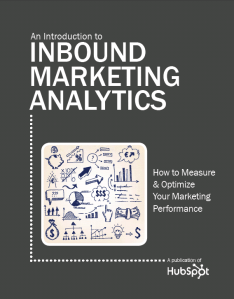
HubSpot does it again, taking content that is not necessarily new or revolutionary and putting it in a nicely formatted eBook that makes reading it a pleasure.

With “An Introduction to Inbound Marketing Analytics“, you get an overview of what to measure and why. Especially useful for small companies and those who are just starting out with their marketing programs and need some help identifying key metrics, the eBook is packed with good advice.

HubSpot Inbound Marketing Analytics eBook

Inbound Marketing Analytics Overview

In the eBook you will see metrics for the following marketing tactics:

  • Social Media
  • Email Marketing
  • Lead Nurturing & Marketing Automation
  • Your Website & Landing Pages
  • Search Engine Optimization
  • Paid Search
  • Business Blogging

The benefits of analyzing your marketing performance according to HubSpot are:

1. Identify what’s working.
2. Identify what’s not working.
3. Identify ways to improve.
4. Implement more of the tactics that work to improve marketing performance

Agreed!

Get your free copy of the “An Introduction to Inbound Marketing Analytics” eBook.

Introduction to Marketing Analytics eBook


Some Good Trade Show Advice

December 13, 2011

Despite the fact that trade show attendance is going down and there is less money in your marketing  budget for attending physical events, if you do have to go to one you’d better make it worth it.

I like how Vanessa Nornberg described in an Inc.com article a few tips to make your trade show profitable:

  1. Buy a booth you can afford
  2. Strategically organize your booth
  3. No chairs
  4. Eliminate distractions
  5. No smart phones
  6. Leave laptops at the hotel
  7. Choose the booth staff wisely

Add those to my previous 12+ tips for trade show success and you’ve got yourself a great checklist for planning your next event! 😉


What Are Your Brand Touchpoints?

December 8, 2011

White fenceA nice post by Nick Westergaard on the “12 Most Underutilized Brand Touchpoints” talks about the stuff many people relegate to second plan when thinking about their company’s brand.

You have your logo, your tagline, your website… but how about product packaging,  brochures, and holiday cards? Yup, holiday cards deserve some branding love too. It’s all about how you present yourself and your company to customers and prospects in every single touchpoint. This means every place where someone will see your company (or read about it) should have the same consistent message, look and feel.

So what are the 12 touchpoints? They are:

  1. Packaging
  2. Invoices
  3. Packing Slips
  4. Price change letters/ renewal notices
  5. User guides
  6. New business proposals
  7. Vehicles
  8. Search ads
  9. Holiday cards
  10. Inter-office / company newsletters
  11. Employees
  12. The back of the fence (this is a Steve Jobs analogy, about what goes inside your product or at the back of the fence where people usually don’t even look)
Check out the full article here: http://12most.com/2011/12/05/12-underutilized-brand-touchpoints/

What is your list of touchpoints?


Effective Content is Clear and Direct

November 28, 2011

Edit: It has been pointed out to me that the Gobbledygook Grader I was linking to in the original post is no longer active. Try instead the “Jargon Grader” by the nice folks at Instructional Solutions.

A recent post by David Meerman Scott touched on a big pet peeve of mine… creating content that is easy to understand. Big organizations suffer from this problem more than others, but it also permeates small and medium businesses. Gobbledygook is spread everywhere, from press releases to website content, to the latest whitepaper or eBook. I think that in larger organizations it probably starts with someone trying to sound smarter than the rest, showing off his or her extensive vocabulary of arcane terms. Or, the person just doesn’t know what exactly to write about and decides to mask the lack of subject matter knowledge. Or a combination of both.

Smaller organizations sometimes fall into the trap of trying to appear bigger than they are and think that if they use the same terms the bigger guys are using, they will sound just like them and will be seen as another big player. Oh, boy. Big mistake.

Clear and Direct Content Wins All the time

When helping others with content, I usually start by asking what the goal is. What do you want the reader to know? What should they walk away with? How are you different? Often times the answers do not reflect what is actually written. Website copy is notorious for that… and you get excuses like “oh, we added all these words for SEO!”, or “that’s exactly what we said! Can’t you read”?

If you are reviewing or creating content, there’s a key component to making it effective. First, be clear. This means taking the content and understanding what it is actually trying to say. Then, just plainly saying it! It’s not rocket science, right?

Also, make it concise. The key to making it concise is to be direct. Instead of beating around the bush, just jump out and say it (or, write it). Here’s a quick example (actual text from a company’s website, I did not create it):

Original: ABC Company’s  training services are created with the primary objective of making our customers successful in using our products.

Modified: With our training services you will become productive in no time.

So, this is my first pass and you could make it even better, but you get the idea.

What is your score?

Want to test how well you are doing in creating content that is actually effective? Try out the free Gobbledygook Grader for starters. Then, give your content to someone that is not even remotely associated with what you write about and ask them to tell you what they understand after reading it. You will find the results surprising.

Happy content creation!


Content Marketing Starts With Your Brand

November 18, 2011

Branding used to be a high-level exercise bigger companies went through as part of their strategic marketing processes. You get an agency, brainstorm cute pictures, logos, and tag lines, come up with the visual guidelines, and move on. Every now and then you refer back to those branding guidelines that tell you the correct position for your logo and the approved color scheme.

Fast forward to today. You’re not doing passive marketing anymore, you’re actively seeking out, enticing, educating, and engaging your audience. You are creating content. Your colleague on the other side of the cubicle is creating content. Even the receptionist with her Facebook updates is creating content. Where is your brand now?

It Starts With the Brand

Content marketing experts tell you to find your voice. They tell you to be authentic, to show there’s a face behind the tweets, there’s people behind the whitepapers, and that there is a personality for your company. This is all good, and is all part of branding.

How is branding related to content marketing? When you think of your company’s brand (whatever size company you may be working for / with), you have to consider the following aspects of who your company is:

  • Purpose: why do you do what you do?
  • Values: what do you stand for and how you behave?
  • Promise: what differentiates you from everyone else? Why are you relevant?
  • Voice: how do you present yourself, your look and feel

If we put it another way, think about how your company behaves, how it is perceived in the market, and what it wants to stand for. For example, how is your company in relation to the following “attributes”:

  • Serious vs. Playful
  • Funny vs. Taciturn
  • Outspoken vs. Introverted
  • Analytical vs. Impulsive
  • Likes to socialize vs. Keeps to himself
  • Wordy vs. Concise
  • Courageous vs. Prudent

Looks like a personality test? Well, it kinda is. Your ‘brand’ has a personality, a voice, a look. When you create content, you have to keep those things in mind. It helps with maintaining consistency, in presenting a unified front whether is via an eBook, a video, or a presentation.

Your Brand and Content Marketing

If you are a one-person shop, going through this exercise is faster. It’s all in your head and you basically have to decide if your company’s brand will be an extension of your own personality and behavior or if you’ll give it a different twist. For larger companies this will involve getting leaders from all areas together to understand what exactly makes the company unique. It will also involve documenting your brand attributes and communicating it to the rest of the company.

If you are thinking about putting together a social media policy, for example, it would have to follow the brand strategy for your company. When hiring someone, the brand is an important factor to consider. The company’s culture will be extremely close to the brand as well and is what will ultimately drive the brand and sustain it.

So as you put together your content marketing plan and decide which angles to approach certain topics, think back to your brand. That’s the first step in creating the best content.


Are You Spending Enough on Online Marketing?

November 3, 2011

Although the level of marketing spend doesn’t usually correlate to marketing effectiveness, it is useful to know how others in your industry or other companies of similar size are spending their money on marketing.

Forrester Research has recently released a study, “Benchmark Your Interactive Marketing Maturity“, that aims to give you some metrics to figure out whether you are putting your money on the right marketing tactics.

Five Benchmarks

According to Forrester, you should take a look at the following:

  1. Annual interactive marketing budget: this involves branching out from the pure email marketing tactic and looking at mobile, tablets, and the like.
  2. Share of advertising budget dedicated to interactive marketing: shift the money from the typical print and TV ads and invest in online channels.
  3. Percent of interactive budget earmarked for emerging media: invest in new technologies and start trying out channels before your competition does.
  4. Size of interactive marketing teams: unless you have people dedicated to interactive marketing, not much will get accomplished.
  5. Number of agencies leveraged for interactive support: it is difficult to find an agency that can do it all, so typically you will have to use a couple or more.

Comparing Your Numbers

Sure, knowing the benchmark metrics help a little but what are the numbers? If you’re a small company then the report won’t be of much help because it breaks down the survey respondents into those with less than $1 billion in revenues, $1 billion to $9.9 billion, and those of $10 billion and more. In other words, is a good benchmark for the big guys.

So if the survey finding that the median of annual interactive marketing budgets is $7.19 million leaves you thinking “if I only had 10% of that!” don’t despair. It is still interesting to see the percentage of allocation for each type of interactive initiative and then compare to how your own company is doing. If nothing else, serves to start a conversation about where the marketing money should be spent.

Using the Benchmarks

There are many ways in which you can analyze and use the report:

  • Look at company size and compare with your own budget. Bigger companies will allocate more resources, and depending on what you sell the online venue might require a bigger piece of the pie versus those that need to rely mostly on traditional channels to reach their audiences.
  • Your business goals should determine priorities. The purchasing process your buyers follow, your overall business objectives and competitive positioning should be taken into account when comparing what others are doing.
  • New is good, but be careful. Sure, interactive marketing and new shiny toys are great, but beware of untested tools and tactics. In other words, test, test, and test some more before jumping in.
  • Get the right skill set. Which means, hire the right people with the right skills to manage the programs you plan on investing in.
  • Use agencies wisely. Big and smaller companies need to really assess the role agencies play in their overall marketing strategy and what types of agencies are appropriate.

Measure Yourself (Free!)

Luckily, Forrester has created a free online tool based on their study results that allows you to plug in your numbers to get a high-level comparison based on benchmark data.

It’s worth trying out: Forrester Benchmarking Tool


How An Old School Product Leveraged A New Mobile App

September 20, 2011

It has been out for a couple months now, the new myStain app from Clorox, but only now I have seen an interesting account of the marketing campaign and results highlighted in an article from MarketingNews (an AMA publication, requires registration).

Clorox myStain AppAs I first started reading about the mobile app that gives tips on stain removal, I wasn’t sure who would actually want to download it. Well, it seems the app has been downloaded over 75,000 times and 50% of users have shared the app via e-mail, Facebook or Twitter, according to the MarketingNews article.

In addition to that, Clorox got a bunch of good press and, according to David Kellis, PR manager at Clorox, “this app helped us make [our site] more searchable, more functional. It opened our eyes into how we should be positioning [the way] people search for stain solutions”.

The transformation in the perception of the Clorox brand was also a key success for the company. For me, it showed that even a near-century-old bleach brand can leverage modern technology to create something not only creative but really amazing. What a great way to connect with customers and refresh their perception of your brand.

For more about the app, the Mobile Marketer blog has a good overview.


It’s All About the Landing Page

September 12, 2011

Surprising results from eConsultancy’s recent survey on the use of QR Codes showed that:

  • 64% of consumers don’t know what QR Codes are
  • Of the consumers that know what QR codes are, only 11% have used them
  • Of those that have used QR codes, 20% think they don’t really offer any advantages and don’t expect to use them in future

Yikes!

The survey goes on to point out that marketers have to be innovative and think outside the box when it comes to using QR Codes:

“Don’t rely on QR codes alone. To avoid excluding people without smartphones or those without a reader app, then provide other ways for them to respond to ads, or find out more about products. ” – eConsultancy

But the not so surprising result from the survey was that when using QR codes, it really comes down to the Landing Page.

How Good is Your Landing Page?

It’s typical, really. You scan the QR code and the landing page you then see is a) not formatted for mobile devices; b) not interesting enough; or c) doesn’t exist. Next time you see a QR code you won’t even try to scan the thing because you have already been disappointed once.

Landing pages can determine the success not only of a QR code campaign, but of any campaign that takes the user to your website. Email marketing, online surveys, PPC and more. That might explain why, according to MarketingSherpa, the number of people that work full time in Landing Page Optimization projects has grown steadily over the past couple years.

So where do you go from here? Check out this blog post from Marketing Experiments, “36 articles and resources to help you complete your next LPO project“, is a great starting point.

After all, remember that it’s all about the landing page!