Inbound Marketing Analytics 101

December 14, 2011

HubSpot does it again, taking content that is not necessarily new or revolutionary and putting it in a nicely formatted eBook that makes reading it a pleasure.

With “An Introduction to Inbound Marketing Analytics“, you get an overview of what to measure and why. Especially useful for small companies and those who are just starting out with their marketing programs and need some help identifying key metrics, the eBook is packed with good advice.

HubSpot Inbound Marketing Analytics eBook

Inbound Marketing Analytics Overview

In the eBook you will see metrics for the following marketing tactics:

  • Social Media
  • Email Marketing
  • Lead Nurturing & Marketing Automation
  • Your Website & Landing Pages
  • Search Engine Optimization
  • Paid Search
  • Business Blogging

The benefits of analyzing your marketing performance according to HubSpot are:

1. Identify what’s working.
2. Identify what’s not working.
3. Identify ways to improve.
4. Implement more of the tactics that work to improve marketing performance

Agreed!

Get your free copy of the “An Introduction to Inbound Marketing Analytics” eBook.

Introduction to Marketing Analytics eBook


What Are Your Brand Touchpoints?

December 8, 2011

White fenceA nice post by Nick Westergaard on the “12 Most Underutilized Brand Touchpoints” talks about the stuff many people relegate to second plan when thinking about their company’s brand.

You have your logo, your tagline, your website… but how about product packaging,  brochures, and holiday cards? Yup, holiday cards deserve some branding love too. It’s all about how you present yourself and your company to customers and prospects in every single touchpoint. This means every place where someone will see your company (or read about it) should have the same consistent message, look and feel.

So what are the 12 touchpoints? They are:

  1. Packaging
  2. Invoices
  3. Packing Slips
  4. Price change letters/ renewal notices
  5. User guides
  6. New business proposals
  7. Vehicles
  8. Search ads
  9. Holiday cards
  10. Inter-office / company newsletters
  11. Employees
  12. The back of the fence (this is a Steve Jobs analogy, about what goes inside your product or at the back of the fence where people usually don’t even look)
Check out the full article here: http://12most.com/2011/12/05/12-underutilized-brand-touchpoints/

What is your list of touchpoints?


Effective Content is Clear and Direct

November 28, 2011

Edit: It has been pointed out to me that the Gobbledygook Grader I was linking to in the original post is no longer active. Try instead the “Jargon Grader” by the nice folks at Instructional Solutions.

A recent post by David Meerman Scott touched on a big pet peeve of mine… creating content that is easy to understand. Big organizations suffer from this problem more than others, but it also permeates small and medium businesses. Gobbledygook is spread everywhere, from press releases to website content, to the latest whitepaper or eBook. I think that in larger organizations it probably starts with someone trying to sound smarter than the rest, showing off his or her extensive vocabulary of arcane terms. Or, the person just doesn’t know what exactly to write about and decides to mask the lack of subject matter knowledge. Or a combination of both.

Smaller organizations sometimes fall into the trap of trying to appear bigger than they are and think that if they use the same terms the bigger guys are using, they will sound just like them and will be seen as another big player. Oh, boy. Big mistake.

Clear and Direct Content Wins All the time

When helping others with content, I usually start by asking what the goal is. What do you want the reader to know? What should they walk away with? How are you different? Often times the answers do not reflect what is actually written. Website copy is notorious for that… and you get excuses like “oh, we added all these words for SEO!”, or “that’s exactly what we said! Can’t you read”?

If you are reviewing or creating content, there’s a key component to making it effective. First, be clear. This means taking the content and understanding what it is actually trying to say. Then, just plainly saying it! It’s not rocket science, right?

Also, make it concise. The key to making it concise is to be direct. Instead of beating around the bush, just jump out and say it (or, write it). Here’s a quick example (actual text from a company’s website, I did not create it):

Original: ABC Company’s  training services are created with the primary objective of making our customers successful in using our products.

Modified: With our training services you will become productive in no time.

So, this is my first pass and you could make it even better, but you get the idea.

What is your score?

Want to test how well you are doing in creating content that is actually effective? Try out the free Gobbledygook Grader for starters. Then, give your content to someone that is not even remotely associated with what you write about and ask them to tell you what they understand after reading it. You will find the results surprising.

Happy content creation!


Content Marketing Starts With Your Brand

November 18, 2011

Branding used to be a high-level exercise bigger companies went through as part of their strategic marketing processes. You get an agency, brainstorm cute pictures, logos, and tag lines, come up with the visual guidelines, and move on. Every now and then you refer back to those branding guidelines that tell you the correct position for your logo and the approved color scheme.

Fast forward to today. You’re not doing passive marketing anymore, you’re actively seeking out, enticing, educating, and engaging your audience. You are creating content. Your colleague on the other side of the cubicle is creating content. Even the receptionist with her Facebook updates is creating content. Where is your brand now?

It Starts With the Brand

Content marketing experts tell you to find your voice. They tell you to be authentic, to show there’s a face behind the tweets, there’s people behind the whitepapers, and that there is a personality for your company. This is all good, and is all part of branding.

How is branding related to content marketing? When you think of your company’s brand (whatever size company you may be working for / with), you have to consider the following aspects of who your company is:

  • Purpose: why do you do what you do?
  • Values: what do you stand for and how you behave?
  • Promise: what differentiates you from everyone else? Why are you relevant?
  • Voice: how do you present yourself, your look and feel

If we put it another way, think about how your company behaves, how it is perceived in the market, and what it wants to stand for. For example, how is your company in relation to the following “attributes”:

  • Serious vs. Playful
  • Funny vs. Taciturn
  • Outspoken vs. Introverted
  • Analytical vs. Impulsive
  • Likes to socialize vs. Keeps to himself
  • Wordy vs. Concise
  • Courageous vs. Prudent

Looks like a personality test? Well, it kinda is. Your ‘brand’ has a personality, a voice, a look. When you create content, you have to keep those things in mind. It helps with maintaining consistency, in presenting a unified front whether is via an eBook, a video, or a presentation.

Your Brand and Content Marketing

If you are a one-person shop, going through this exercise is faster. It’s all in your head and you basically have to decide if your company’s brand will be an extension of your own personality and behavior or if you’ll give it a different twist. For larger companies this will involve getting leaders from all areas together to understand what exactly makes the company unique. It will also involve documenting your brand attributes and communicating it to the rest of the company.

If you are thinking about putting together a social media policy, for example, it would have to follow the brand strategy for your company. When hiring someone, the brand is an important factor to consider. The company’s culture will be extremely close to the brand as well and is what will ultimately drive the brand and sustain it.

So as you put together your content marketing plan and decide which angles to approach certain topics, think back to your brand. That’s the first step in creating the best content.


It’s All About the Landing Page

September 12, 2011

Surprising results from eConsultancy’s recent survey on the use of QR Codes showed that:

  • 64% of consumers don’t know what QR Codes are
  • Of the consumers that know what QR codes are, only 11% have used them
  • Of those that have used QR codes, 20% think they don’t really offer any advantages and don’t expect to use them in future

Yikes!

The survey goes on to point out that marketers have to be innovative and think outside the box when it comes to using QR Codes:

“Don’t rely on QR codes alone. To avoid excluding people without smartphones or those without a reader app, then provide other ways for them to respond to ads, or find out more about products. ” – eConsultancy

But the not so surprising result from the survey was that when using QR codes, it really comes down to the Landing Page.

How Good is Your Landing Page?

It’s typical, really. You scan the QR code and the landing page you then see is a) not formatted for mobile devices; b) not interesting enough; or c) doesn’t exist. Next time you see a QR code you won’t even try to scan the thing because you have already been disappointed once.

Landing pages can determine the success not only of a QR code campaign, but of any campaign that takes the user to your website. Email marketing, online surveys, PPC and more. That might explain why, according to MarketingSherpa, the number of people that work full time in Landing Page Optimization projects has grown steadily over the past couple years.

So where do you go from here? Check out this blog post from Marketing Experiments, “36 articles and resources to help you complete your next LPO project“, is a great starting point.

After all, remember that it’s all about the landing page!


How Great Content Can Solve Problems

August 18, 2011

This is the third post in a series of “Principles of Great Content Marketing”. The first post talked about creating simple content, and the second post discussed timely content.

The Principles of Great Content Marketing series is based on three core ideas:

  1. Create simple content
  2. Create content that is timely
  3. Create content that solves a problem

The Problem with Content

Content abounds, and no matter what we call it (Whitepapers, eBooks, Videos, Infographics, etc.) we have been getting more and more of it every single day. Via email, via Twitter, Facebook, and word-of-mouth. The problem? Most of the content is not looked at. Or, if it is, is not shared.

Content that isn’t shared usually die without having made an impact.

Useful content will be shared. Even if only internally in your company. Even if only when you call a friend and say “hey, check this out!” and even if only mentioned during lunch with friends when you say “oh, and I just read this interesting article that talks about…”.

Getting Read and Getting Shared

Besides being simple and timely, great content has a third element. It is focused on solving a problem. But not just any problem, YOUR problem.

You see, even if you come across something amusing and decide to pass that on it doesn’t mean you will actually take any action because of it. Entertaining videos are just that, entertaining. Funny quotes are also just that and nothing else. But content that speaks to a problem you are having right now is golden.

If you are struggling with creating your own WordPress website, for example, and there comes a content piece that addresses your current issue (“How to get your WordPress site up and running in 5 easy steps” kind of content, for example) you will drop what you are doing and check it out. If it’s good you will even forward it to a couple people that you know are also dealing with the same issue or maybe send a Tweet about it.

If you had gotten content related to your issue but that doesn’t solve it (“Why use WordPress for your website” for example), it won’t get shared, commented, and more importantly, acted on.

The Content Solution

How do create content with the “problem – solution” in mind? You’ve got to know your audience. Draw buyer personas. Talk to sales and ask them about the prospects they engage. Discuss the typical questions tech support gets during lunch with the tech support manager. Ask around your company, but more importantly, ask outside what are the challenges facing the industry you serve.

Make a list of 5 to 10 items. Then, break those down into small problem statements. You don’t want to have to address something like “world-wide retail operations are low margin, companies are struggling to make a profit” because is too generic and too daunting. Go down a few levels until you have something more tangible, like “apparel retailers are pressured by increasing labor costs in China”. Then, look for what could be a solution to this problem (I’m assuming you sell products or services to retailers) and create content addressing the issue (maybe “5 ways to squeeze more cash out of your sales” or “The new retail mindset and five steps to improve your margins today” for example).

Regardless of the topic, you have to ensure you are addressing a need that your target market has. And, the need could range from basic (“Trends and opportunities in apparel retail”), to more advanced (“How new inventory solutions are transforming the apparel retail industry”), all depending upon your target’s knowledge of the issue and their stage in the buying cycle.

As mentioned in the previous post about timely content, Marketing Automation is a great way to get the right content out to the right person, but you still have to think through all the stages and understand the different needs. It goes back to understanding your market.

Principles of Great Content

In conclusion, you can spend a lot of time creating content in different formats and for different buying stages. What will set your content apart (because you can bet your competitors are also creating as much content as you are) are the three key components:

  • Simple content
  • Timely content
  • Problem-solving content

Keep these three elements in mind when crafting your messages and you will be on the right path to creating great content.
Why Timely Content Always Wins

August 16, 2011

This is the second post in a series of “Principles of Great Content Marketing”. The first post talked about creating simple content.

So just to recap, there are three key principles for creating great content:

  1. Is it simple?
  2. Is it timely?
  3. Will it solve a problem?

Simple content was explained earlier and is a sure way to create engaging and direct content. But, even simple great content can’t win you over unless it is timely.

If you don’t need it, you won’t look at it. It’s that simple.

What is Timely Content?

There are three different perspectives to consider:

  • Content that is a hot topic
  • Content that meets your needs
  • Content that creates urgency

The first perspective deals with the hot issues at the moment. Maybe your industry is going through additional regulations or new certifications are being required. Or maybe there’s this new methodology everyone is talking about. The hot topic is not necessarily something you actually need to do right now, but is top of mind, it will get looked at because is part of the trend.

Content that meets your needs is not necessarily about the hype, like the previous perspective, but rather something related to a mandate or a need. If you were told by your boss that you have to close down one of your locations and you come across a Whitepaper that talks about how to calculate which plant to shut down you will be interested in checking it out. Or, you have to start outsourcing the IT function overseas and a webinar invitation for a “how to outsource IT and not regret it later” just came to your inbox so you decide to register.

Finally, the urgency perspective is also related to creating timely content, but content that has an expiration date attached to it. Promotions that will only run for the next 5 days or those offers that gives incentives to you to act now (or be the first, or among the 10 first) before it’s too late.

Timely Content Perspectives

Being urgent or a hot topic doesn’t help much though, unless the content meets the needs of the reader. Content that answers a need will always win. The best content is one that combines the three perspectives to create something that meets the prospect’s current needs, is a hot topic, and creates a sense of urgency. That’s the best timely content you can create.

Timely content needs to evoke the following reaction from the reader: “I’ve gotta check this out now”. And there is either a download, registration, or whatever the call to action is. That’s how you know you nailed it.

Crafting Content for the Right time

Sending content at the right moment (when there’s a need) is tricky. How do you get to send content to a person who is at the right moment to receive it? That’s one of the big promises of Marketing Automation software, of automating the sending of the right content to the right prospect at the right moment in time.

Easier said than done? You bet. That’s because someone has to actually think through what “right moment” really means and also has to understand what clues will tell the software that the right moment approaches.

Regardless of whether you automate or not, one thing is certain. Timely content can only be created if you intimately know your audience. You’ve got to know what their daily activities are, what their challenges are, and what their hopes are as well. It means talking to customers and prospects, getting out of the building, and learning about the industry you are selling to.

Want some shortcuts? We’ll approach them in the next segment, when we talk about creating content that solves problems.


Principles of Great Content Marketing

August 10, 2011

Whether creating a Whitepaper, an eBook, a new Email Marketing campaign, a web page, or any other type of marketing content there are a few basic principles you should follow:

  1. Is it simple?
  2. Is it timely?
  3. Will it solve a problem?

If you can answer “yes” to all three questions above, you’re on the right path to coming up with great content.

Three Key Questions for Creating Quality Content

Simple content wins all the time. It doesn’t matter how many pages, nice graphics, or famous quotes it has, simplicity is key. Making it simple, though, doesn’t mean dumbing down the message. It also doesn’t mean forgoing colors, trying to fit it in one page, or even chopping it up so that people get it in chapters instead of a full book. Simple content means creating something devoid of distractions that don’t contribute to having a better understanding of the message.

Here are three key questions you should ask for each content you create:

  • Is it worded in a way that anyone will understand the message we are trying to convey? Are we using too many technical terms, acronyms?
  • What part of our message do we want to have the most impact? Is it clear and prominent? As journalists usually say, “don’t bury the lead”.
  • Are we providing action points for the reader? Is there a “call to action” clearly defined that is immediately obvious and enticing?

Want a good way to test your assumptions? Get someone in your office outside the marketing department to read the content you just created. It doesn’t have to be finalized, formatted, and nicely designed. Just a draft or mockup would do. Get a few different people (i.e. the accountant, the receptionist, the IT guy) to read it and tell you what they think. You may get some interesting reactions and questions that can help further fine tune the message.

The Message Behind the Content

Want to make sure the content you and your team just created is really the best you could have done? A good practice is to let the content alone for a while (hours or days). Then, go back to it and read it as if you were reading it for the first time. Then, think about the following:

  • What is the core message?
  • Why is this message important?
  • What does the message mean for the reader?
  • If you were to summarize the core message in one sentence (5 to 10 words max) what would it be?

Write it down (for greater impact, ask another team member to do the same so you can compare notes). Then review it and see if the content you had created still looks like the best you can do.

Sure, in most situations content you create today was due yesterday. We’ve all been there… if we only had more resources! But I challenge you to say that the content you created can’t wait 1 more hour before being sent out (or published, or uploaded). Whether you have 1 hour or 1 day, let it rest. Then come back refreshed to it and honestly assess if there’s a better way of crafting the message.

How Simple Content Will Win Always

A principle of simple design (designing interfaces or products that are simple to use) is to always think of what features can you remove from the product that will make for a better user experience. Think of the iPod, for instance. Steve Jobs removed buttons instead of adding new ones (the iPod never had different “stop” and “pause” buttons, only a “pause” button that was the same as the “play” button).

So think of your content and ask yourself what can you remove? What images, what copy? What content, if removed, will make the remaining content stronger and more appealing? It comes down to asking “what can I remove in order to make the main message stronger?”.

No, is not easy. But it is worth trying.

Next up I’ll talk about the two remaining points, creating timely content and focusing on solving problems.


Content Marketing eBook and Infographics

June 23, 2011

A Content Marketing eBook

Content Marketing is all the rave, that’s part of what drove me to do some research on the history of content marketing and publish this free eBook, A Brief History of Content Marketing. I was curious to see how marketers of the past have used content marketing strategies to attract and engage customers before the Internet Age.

The result was a fun project, and many findings. Who would have thought giving away free recipe books could save a company? Or that Microsoft (of all companies) was the first of Fortune 500 corporations to have a corporate blog?

Download the eBook and let me know what you think.

Brief History Content Marketing eBook

The Rise of Marketing Infographics

Also interesting to me was the amount of Infographics, especially ones related to marketing, that I came across during my research and that have been released just now. Here are some great Content Marketing Infographics you may enjoy.

Content Marketing versus traditional marketing

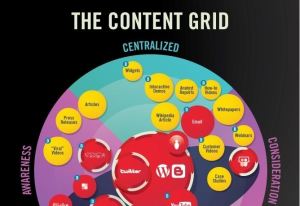
Content Marketing Grid

The problem with content marketing infographic

The Rise of Content Marketing Infographic

Appetite for Content Infographic

Content Marketing Grid Infographic

 Did I miss a great Content Marketing Infographic? Let me know!


Marketing Automation is More Than Technology

June 1, 2011

A new research study by Sirius Decisions, “Calculating the Return on Marketing Automation“, sponsored by Marketo talks about the different levels of companies implementing marketing automation platforms (or MAP, as they call it).

“Companies using technology alone to solve their demand creation issues may actually experience negative return where it matters most”

The report breaks down companies into three segments:

  1. No Marketing Automation, and no processes
  2. Marketing Automation and wither no or weak processes
  3. Marketing Automation with average processes

Although talking about processes is not new, what I liked is that instead of just stating the obvious (no process won’t make the technology work) they try to quantify and answer the more important question of How much does a well defined process really contribute towards your overall marketing automation efforts?

Increasing Response Rates

From the report, it seems the key critical element that is impacted the most by marketing technology when it comes to automating campaign response, nurturing, and scoring your leads is the increase in response rates.

The best way to think about it is to imagine the traditional funnel. As you move from one stage to the next (inquiries, leads, qualified leads, etc.) there are only two ways to impact the outcome, either you get more inquiries or you increase the number going from one stage to the next.

According to Sirius, Marketing Automation technology paired with good processes can yield 4x to 5x the number of closed deals. The magic relies on the higher conversion rates throughout the sales cycle. Is not about getting more leads or more inquiries, is about getting the right ones and improving the odds of closing a deal at each stage.

It’s About Content and Processes

But how are processes helping make sure the system works? Here’s the intersting part, because anyone can implement technology to automate what goes out to customers and prospects. The pairing of processes means more than ensuring emails go out when they should, it takes care of ensuring the right message is sent to the right person at the right time.

And when the process includes both sales and marketing working together on definitions, on content strategy, and qualification criteria companies see higher response rates overall. As the report states:

With a handoff process in place, sales now accepts and processes more than 58percent of MQLs; the higher quality of these leads in turn yield a third conversion rate of roughly 49 percent to opportunity, and an increased close rate of a bit more than 23 percent.

Adding technology without processes may make you feel better at first, but will only serve to highlight the problems you always had. The key is to rethink your approach and use technology to leverage your processes, not the other way around.