Making the Most of Your Webinars

February 7, 2011

A recent report from On24, “Webcast Benchmarks and Best Practices for Lead Generation“,  has some interesting numbers when it comes to how webinars are being used and their effectiveness at lead generation. Take for instance the following:

  • The average webcasts captures 441 registrants
  • Attendee participation is usually 50-60% of registrations
  • 15-30% of registrants are sales-qualified opportunities

The numbers above should be enough for you to go back to your own metrics and see how you compare. Sure, depending on your industry the numbers might be skewed but at least you have a benchmark and something to show (or not!) senior management when your results are being questioned.

The report goes a bit further and also tells us that 52% of all registrations occur within 10 days before a scheduled webinar and 15% registering on the day of the webcast. In my experience this is accurate, and sometimes during the day (or the day before) of the event tends to bring an increasing number of new registrations. We are all procrastinators it seems when it comes to registering for online events.

What’s the ROI of webcasting?

According to the survey webcasts have a $22.60 cost per registrant for those with an average of 441 registrants and $39 per participant if the average is 256 participants. I personally think these numbers are high, but it depends heavily on the webinar platform you’re using. On24 is not the lowest priced one on the market (Adobe Connect, WebEx, and GoToWebinar all charge less for webinars), but this should be easy enough for you to calculate for your specific situation. Oh, but note that the cost involves “audience generation programs, to produce and promote a webcast”, so you have to add your email marketing costs (again, different platforms will charge differently) and any additional method you typically use to get people to register and attend.

I encourage you to download the FREE report from On24 and check out some additional nuggets that can help you evaluation your own webcasting program.


Upcoming Marketing Conferences

February 3, 2011

It’s February already and you keep thinking “what the heck happened to January”? You’re note alone. A few good events have come and gone, like the Digital Marketing Forum, MarketingSherpa’s Email Marketing Summit, and the Email Evolution Conference and I completely missed them.

Sure, budget is short and you can’t attend every single event, but is good to know what’s coming up so that you can prepare yourself and pick the ones you should go. Also, the earlier you register usually the better deal you can get. So here you go, this is the list of marketing events and marketing conferences coming up (US only) for the first half of 2011. Check them out, pick a couple and start planning!

Upcoming marketing conferences

==February==

Online Marketing Summit
February 7-11
San Diego, CA
Link: http://www.onlinemarketingsummit.com/

Social Media Strategies Summit
February 8-10San Francisco, CA
Link: http://socialmediastrategiessummit.com/

Frost & Sullivan Marketing World
February 8-11
New Orleans, LA
Link: http://www.frost.com/prod/servlet/summits-details.pag?eventid=200426011

Social Media Camp
February 9New York, NY
Link: http://socialmediacampny.com/

Social Media Masters
February 11San Diego, CA
Link: http://socialmediamasters.com/

Content Marketing Strategies Conference
February 16-17
Berkeley, CA
Link: http://contentmarketingstrategies-mashable.eventbrite.com/

Social Fresh Tampa
February 21-22
Tampa, FL
Link: http://socialfresh.com/tampa/

DMA Mobile Marketing Day
February 22
New York, NY
Link: http://www.the-dma.org/councilevents/mobileday/

==March==

Marketing Research Executive Forum
March 6-8
Atlanta, GA
Link: http://www.marketingpower.com/Calendar/Pages/default.aspx

Search Marketing Expo
March 8-10
San Jose, CA
Link: http://searchmarketingexpo.com/

Conversion Conference
March 14-15
San Francisco, CA
Link: http://conversionconference.com/west/home.html

Search Engine Strategies
March 21-15
New York, NY
Link: http://www.searchenginestrategies.com/newyork/

==April==

Forrester Marketing Forum
April 5-6
San Francisco, CA
Link: http://www.forrester.com/events/eventdetail/0,9179,2511,00.html

AdTech
April 11-13
San Francisco, CA
Link: http://www.ad-tech.com/sf/adtech_san_francisco.aspx

The Power of eMarketing Conference
April 19-20
San Francisco, CA
Link: http://www.emarketingassociation.com/2011/SF/index.html

Mobile Marketing Strategies Summit
April 26-28San Francisco, CA
Link: http://mobilemarketingstrategiessummit.com/

==May==

Marketing Innovation Summit
May 2-5
Boston, MA
Link: http://www.mis2011.com/Boston/Home

Sirius Decisions Summit
May 4-6
Scottsdale, AZ
Link: http://www.siriusdecisions.com/live/home/document.php?dA=ConfAnnSummit2011

Event Marketing Summit
May 16-18
Chicago, IL
Link: http://emsummit.eventmarketer.com/

==June==

International BMA Conference
June 1-3
Chicago, IL
Link: http://www.marketing.org/i4a/pages/index.cfm?pageid=5288

MarketingProfs B2B Forum
June 13-15
Boston, MA
Link: TBD

==

And the following are some of the marketing conferences I’ll keep watch and decide as we get closer.

MarketingSherpa B2B Marketing Summit Boston
09/26-27
Boston, MA

MarketingSherpa B2B Marketing Summit SF
10/24-25
San Francisco, CA

Dreamforce 2011
August 30-Sept 2
San Francisco, CA

BlogWorld Expo
October 14-16
Las Vegas, NV

Conferences abound, but they are a great way to learn new things, network, and more importantly get out of the office and focus for a couple days.

P.S.: I’ll be presenting at the upcoming The Power of eMarketing Conference, so if you plan on going to that one let me know so we can meetup.

Did I forget a conference? Let me know and I’ll update the list.


Aberdeen Shows How to Do Email Marketing Right

January 13, 2011

The new research report from Aberdeen Group “Email Marketing: Customers Take it Personallyhas some very interesting insights. They talk about how the increase in the number of available marketing channels coupled with the resource constraints of most marketing organizations is the toughest challenge for marketers to overcome. If you have just started your 2011 campaigns after battling the budget process, I bet you can definitely see some relation to your own company.

So with all these new channels available, why does email marketing continue to be a top choice for marketers everywhere? According to the research “email marketing’s ability to provide a high quantity of leads combined with direct revenue gains” is what makes it still an attractive channel. Even when compared with social media, the research states:

“83% of all companies surveyed indicate they will leverage email as a core tool in the marketing mix and at a rate 54% more than social media despite that channel’s growth and popularity”

This is definitely contrary to a lot of the predictions of email marketing’s death and the rise of social media as the main communications channel for marketing that we heard throughout 2010.

In their research they also classify companies according to their results in email marketing usage. The leaders of the pack, called Best-in-Class companies, follow some best practices you can also adopt at your own organization:

  • Remove opt-out members from database
  • Remove hard and soft bounce recipients from the database through email authentication
  • Deliver special offers to high value customers
  • Integrate nurturing of existing leads with campaign results
  • Have an organization structure that supports data capture and sharing
  • Measure the impact of email marketing optimization practices and changes
  • Share the activity history of an existing or net-new lead with sales team

And, they add that the real key critical factor is the personalization of content in your emails. They say that “companies that marry high value customers with personalized, specialized offers in their email campaigns produce far greater results on every tangible measure of effectiveness”. Content personalization is not an easy task but according to the research it will likely give you a 38% better open rate and 86% greater click-through rate than non-personalized email messages.

The lesson? Work your way through the list above and start playing with content personalization, even if only for a small segment of your database. It will likely pay off handsomely.

The report has more interesting stuff and  I suggest you spend a few minutes reading it. You can get it for free for a limited time here:

http://bit.ly/fxiUoz


What Makes a Great Creative Brief?

January 7, 2011

A similar question was posted on Quora and elicited a number of different but very interesting responses. It just goes to show that there is still a lot of controversy when it comes to creative briefs in marketing. If you come from the agency side, you are used to a certain format. Big companies and small companies have different needs, and so their briefs are also formatted differently.

From the discussion thread I liked two presentations that were shared, posted below. The first is an interesting research done by Jasmin Cheng (from Twist Image) about creative briefs in the industry, and the second is a presentation by Nick Emmel on how to properly write a creative brief. While they don’t settle the discussion, are good sources for inspiration nonetheless.

And, if you’re interested in looking at some different formats for creative briefs, check out this blog post on creative brief template review.


Marketing Automation Monday is Here!

December 8, 2010

On Monday I attended a Marketing Automation Monday event, put together by the Marketing Automation Association, a newly formed group of marketing professionals that discusses all things related to marketing automation and best practices. It was really fun and if you are interested in learning how other marketers are tackling their marketing, CRM, and even sales challenges this is the place to go.

Some of the issues discussed were:

  • Who manages and who owns the CRM system in your organization?
  • How do you setup your scoring system for inbound leads?
  • What is the hand-off process with sales?
  • How do you get a feedback loop established with sales so that you can get better at scoring your leads?
  • Buyer personas and content creation

The interaction was great and the fact that we had people from both SMB and large companies was great, we could hear both sides of the story and how different size companies work with marketing automation.

One of the interesting points raised during the discussion was about content creation. Sure, you can setup all the triggers, scores and processes in your MA system but nothing will matter if you don’t have the content to support it. Most companies start off with one track for their automation and nurturing programs and expand with time. Ideally, you want to match your content with the buyer persona and the nurturing/sales stage. I.E. one type of content is sent to the IT Manager who is evaluating vendors while another is sent to the Programmer who is trying to learn more about your product.

A recent chart from MarketingSherpa touches a bit upon the content creation challenge for email marketing (see below). In it they show how automatically sending email based on triggers is more effective than allowing subscribers to specify email preferences. Interesting also that according to their research the segmentation of email campaigns based on behavior (which is a big part of a Marketing Automation program) is also less effective than the sending of emails based on triggers.

Three dimensions of relevancy tactics

As always, you have to take all of this with a grain of salt. An important point raised during the Marketing Automation Monday meeting was that you should really analyze your company’s history and understand based on your historical data (i.e. which leads turned into closed deals, where did they come from, what programs generated more closed deals, etc.) what is working best for you and what patterns can you see in your history that will help you fine tune your automation programs.

Interested in learning more about Marketing Automation and how to take advantage of it? Join the LinkedIn group and attend the next event!


Marketing By Objectives

November 29, 2010

Objective-Action-Budget

In a recent article for the CMO Council’s Newsletter, Nicolas Watkis argues “Marketers won’t succeed if they don’t have objectives”. Right on, my friend!

As we have all heard before, marketers are now more than in any other time being measured and challenged to produce measurable results. Mr. Watkis then states “the most important activities for marketers are the establishment of marketing objectives, a plan for their achievement, a budget to support the plan, and the management of assets and resources to achieve the objectives”.

OK, I think we can all agree this makes sense, but then how do you go about coming up with a plan? His article argues that most marketers start with the budget and foolishly take that for a marketing plan while the right approach is actually quite different:

1. Set measurable objectives, both financial and marketing. The financial objectives are revenue, profits, return on assets (how much sales will the campaign generate? Is a valid question to answer in your objective) and although he doesn’t describe what the “marketing objectives” are, I would focus on lead generation numbers (how many qualified leads, for example) although other metrics such as “number of blog posts” or “twitter messages” could be valid objectives for social media campaigns.

2. List actions to be take for each objective, with completion dates, people responsible for each action and also think in terms of alternative actions (what to do in case the action is not successful). This last bit is important for factors outside your influence, maybe a contract that depends on another company has to be signed for the joint marketing campaign to start, or what to do if certain assumptions you’ve made when putting together the plan fail to materialize (i.e. what to do if mommy bloggers don’t pick up our story or offer right away as we hope they will do).

3. Profit and loss projection with a detailed marketing budget showing the allocation of resources. So here it is, the marketing budget, the final component of the marketing plan.

The methodology of OBJECTIVE -> ACTION -> BUDGET is logic, but why is it that so many marketers keep insisting on coming up with the budget before actually putting a plan in place? The “let’s copy last year’s budget” mentality is prevalent in many organizations because is the easy way out of a not so glamorous function. Maybe now is time for some change. So write “objective -> action -> budget”  down on paper, in big letters and stick it to your corkboard or use a post-it and glue it to your computer monitor. That’s what I just did 🙂


B2B Marketers Hold Off on Killing Traditional Media

October 22, 2010

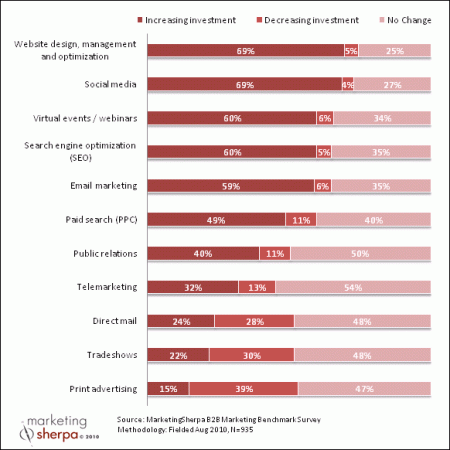
And so from the looks of it, according to the latest chart from MarketingSherpa, traditional marketing venues such as trade shows and advertising are still in play today and will be for the next year. Their latest study points out that “The majority of B2B organizations are increasing marketing budgets for inbound marketing tactics, including social media, virtual events and webinars, SEO and PPC”.

But, more interesting is that the majority of B2B Marketers are not planning on changing their marketing budget allocation for traditional marketing tactics. Also interesting to note that telemarketing as a budget item will also remain a key part of the budget, which shows outbound lead generation is still a strong component of most marketing plans.


B2B Marketing Summit Shows Old Problems Persist

October 14, 2010

So it seems MarketingSherpa’s B2B Summit 2010 is over and from what I read in their wrap up post, the same old problems plaguing marketers for the last 5 years are still here today. First of all, what is this summit? According to their post:

“Last week in San Francisco, 211 business-to-business marketers spent two days sharing insights, case studies and advice on social media marketing, lead generation, Sales and Marketing alignment, and other hot-button issues on the West Coast swing of MarketingSherpa’s seventh annual B2B Marketing Summit.”

MarketingSherpa is known for quality content and I have attended a couple conferences (I was a speaker at the Email Marketing Summit 2008) and have always thought that the best you get from attending an event like this is more in the form of networking than in content itself. The other good thing about going to such a conference for me, is that I get dedicated time to really think through all the topics being discussed, without being interrupted for meetings, phone ringing and people walking in the office.

The many takeaways from this year’s B2B Marketing Summit (West Coast) according to MarketingSherpa, were:

  1. Begin with the end in mind
  2. Put yourself in your customers’ shoes
  3. Getting a lead is just the beginning…
  4. For successful lead generation and nurturing, you need quality content
  5. Use measurements that matter
  6. It all happens on the landing page
  7. Be strategic about presenting your campaigns and your vision to the C-level

None of the takeaways above strike me as particularly new or groundbreaking, but that’s how it always goes. Sometimes we just need to be reminded of the obvious so that we can focus on the essential.


Flip the Funnel Book Review

October 13, 2010

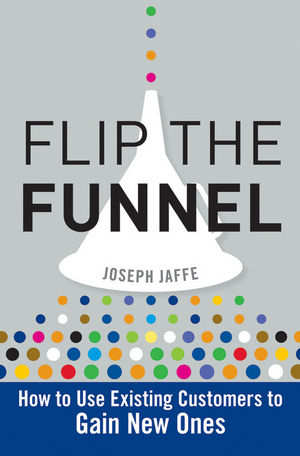
At the San Francisco Marketing Book Club meeting last week we discussed “Flip the Funnel: How to use existing customers to gain new ones“, by Joseph Jaffe. 
What’s the verdict?  Buy the book. OK, now the explanations and caveats.

First, the book talks about the essential function of customer service and how to leverage it with today’s current technologies, including (of course) social media. If you haven’t read much about customer service or if marketing isn’t your background, then the book will be a good starting point. For those that have some experience and background on the topic of excellence in customer service and have read one of the many classic books out there, then a lot of it will be just a review of what has already been said.

My biggest disappointed was that the author used mostly well known examples to illustrate his points. JetBlue, Domino’s, United Airlines, Zappos, and others are cases that we marketers already know. I would have liked to see other companies that he has worked with and are not so obvious and how they implemented his recommendations or how they have failed to recognize the importance of “flipping the funnel”. But then, maybe I’m not the target market for this book.

The other thing to be aware is that Mr. Jaffe is a bit verbose. If you have listened to his podcasts or seen his videos, then you know what I’m talking about. I felt like skipping a few pages just so I could get right to the point. Others may be ok with his style, but it just made it much harder for me to make progress. You should read an excerpt or check it out at the local bookstore to see if you like how he writes before buying the book.

But don’t be fooled, there are some really good ideas in the book:

Where is the money going?

Early in the book he makes the case that we’re spending money on the wrong side of the funnel. “Shouldn’t we be spending money against qualified prospective buyers versus shots in the dark at bagging a random stranger?”. He continues saying “The marketing funnel produces customers – but then does nothing with them.”

How right he is! Why is it we spend all that money and effort into getting people interested just to forget about them once we get the purchase order? There’s gold to be mined in existing customers and the book treats this as the new mantra for marketing. In Jaffe’s words “Keeping, cultivating, and nurturing existing customers and establishing unbreakable bonds with them”.

Segment and Treat Customers Differently

Although the methodology varies based on your industry and whether you are a B2B or B2C company, the big picture is clear. “The more opportunities we give our customers to engage us (as opposed to us engaging them), the more likely they’ll be able to do just that”, and I completely agree. According to Jaffe, we should segment customers into “walkers”, “talkers”, and “hybrid”, and deploy distinct approaches for each one. His new “flipped funnel” approach to doing that is called A.D.I.A (Acknowledgement, Dialogue, Incentivization, and Activation).

The Customer Experience

The whole point of the “new” flipped funnel approach is to create this unique “customer experience”, which means giving customers ways in which they can interact with the brand, and we can interact back with them. Sure, this is not new, but he suggests that “companies need to have an intensive, omnipresent approach to dealing with their customers”. Does this sound like your company? I know, everyone talks about how important the customer is, etc but very few companies really put the necessary resources behind that. The payback, he argues, is that “customers will pay a premium for higher perceived value”, and such value is likely to be how customers are treated. Customer service becomes your product, or better yet, the differentiator between your product and your competitor’s.

Social Media Still Not Treated Seriously

Where I think the book falls short is on the implementation side. It talks about companies having to deploy capabilities across every single customer touchpoint, connecting the dots between the physical and virtual world and giving customer service the strategic value it deserves, but there’s not much in terms of HOW companies are doing that. Although, if the research from MS&L mentioned in the book is correct (one third of companies are not incorporating social media in marketing efforts, and of 63% that were, a full two-thirds had not made changes to products or marketing based on customer feedback), then the problem is actually there aren’t many good examples to follow. Are we entering a new world, travelling a path very few have survived? We’ll see.


In sum, if you’ve already read a few books on the subject, you’re not going to gain anything new but for the novice or uninitiated this book may be just what you need to get your company on the right track to flipping the funnel and gaining new customers.


Making Website Reviews Easy

October 5, 2010

64/365 - mapping by Jenn Vargas @ Flickr

The website is a few years old, there are some inconsistencies in font and the colors don’t match all that well. On top of that, now you have videos you want to showcase and the home page was not designed with that in mind. In sum, the website needs a complete makeover. Sounds familiar?

When reviewing websites and discussing design elements, you invariably end up drawing all over the whiteboard, asking your designer to come up with some mockups and then annotating those and sending them back. How about using some technology to make things easier? I’ve already discussed the use of PowerPoint for website reviews and if you’re starting from scratch it not only provides you with a grate starting point but is a low cost solutions.

For reviewing existing websites, I have used my tablet PC to make screen annotations and save them as images to the team, but what if you have people remote or if you want them to review and add their own comments about the site on their own time?

Below are a few useful tools out there for this problem.

Website Review and Annotation Tools

ShiftSpace.org is an interesting app that gives you the ability to comment on any website using your browser, but others have to have ShiftSpace installed to see them.

Google Sidewiki is an extension for Google Chrome that lets you comment on any website, but falls short on the drawing options (arrows and circles and such).

Diigo allows you to add sticky notes and highlights to websites and share with other people, and they do not have to have diigo installed. Problem is, you can’t draw circles or squares on the site to illustrate changes in the design.

Sharedcopy.com takes a screenshot of a site, let’s you annotate, send to other people, where they can add their own comments to it. Requires users to have the sharecopy bookmark app on their browsers, but works nicely.

Notable is a paid app that gives you great tools for annotations and commenting on any site.

Bounce is my favorite so far, because not only is a free version of Notable, but is the easiest to use. No registrations, no downloads required. Simply go to the Bounce site, enter a URL and start annotating. Then save the comments and share the unique link with your team. If there’s one thing missing is the ability to draw on the page.

Any other tools I have missed?